Shutters vs Curtains: Privacy, Light Control and Value
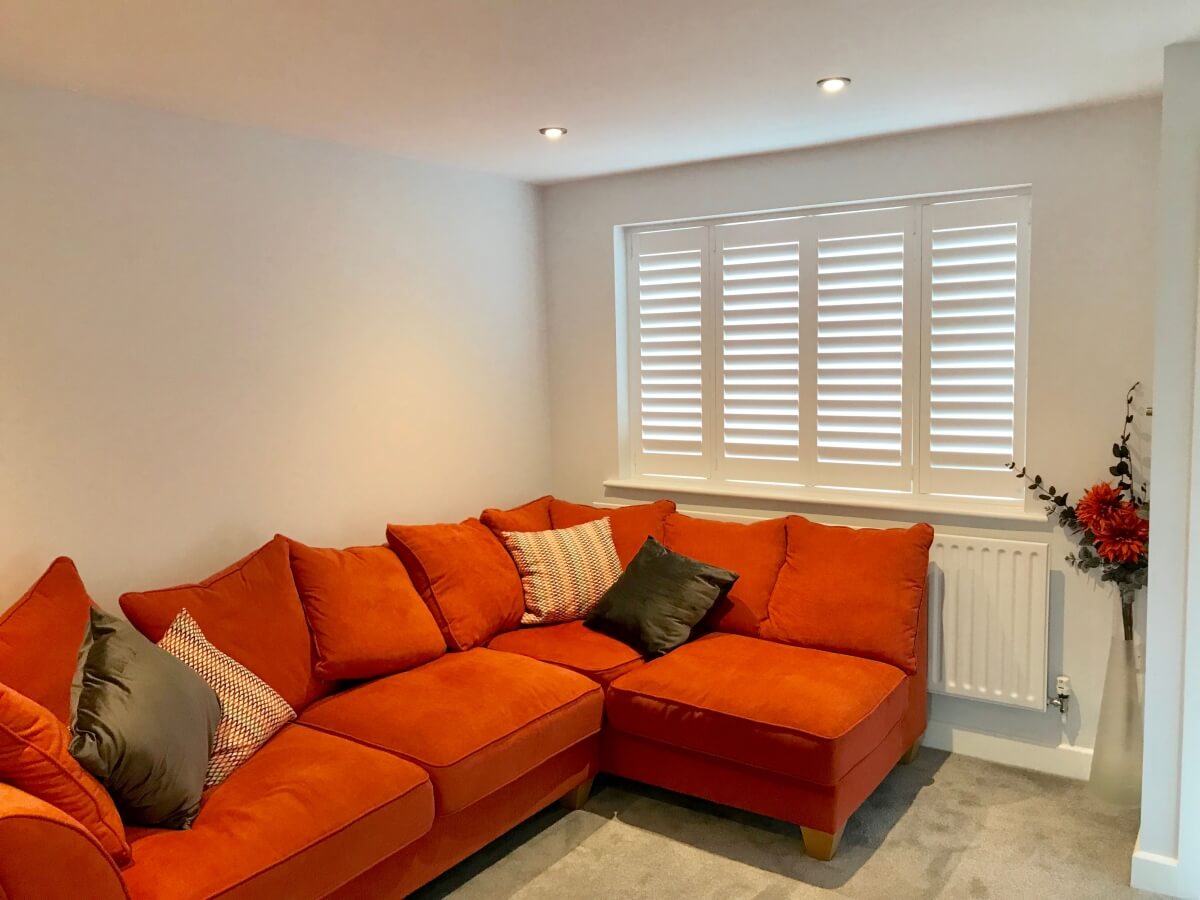
Privacy and light control compared side by side Cleaning, maintenance and how each option ages Cost over time and the value of a made-to-measure fit
If you are weighing up how to dress your windows, the shutters vs curtains question comes up in almost every home we survey. Both can look lovely, but they behave very differently once they are actually up – through the seasons, through the day, and through the years. Here is an honest, side-by-side look at what really separates them.
Privacy: Day and Night
Curtains give you privacy by covering the whole window with fabric. Closed, they screen the room from the street; open, they are pulled back to let the view and light in. The catch is that most fabrics offer little to no privacy at night, when a lit room and a dark street reverse the effect – your silhouette becomes visible to anyone passing.
Wooden shutters work the opposite way. Because the louvres tilt, you can angle them closed while still leaving the top of the window open to the sky. That means daylight and privacy at the same time – something fabric simply cannot do. For street-facing rooms in a busy Farnborough or Guildford terrace, that single difference often settles the debate.
Light Control: Precision vs Approximate
Curtains offer roughly two settings: open or closed. Sheer layers soften the glare, heavier linings block more, but you are always adjusting the whole window as one piece.
Shutters give you genuine control. A cafe style shutter covers just the lower half, so you can keep the street screened while the upper panes stay clear. Tier on tier shutters split top and bottom into independent panels, so one person can read in full light below while the upper section stays shaded. Full height shutters span the whole window as a single elegant design, and bay window shutters are shaped to follow every angled pane of the bay.
If a room bakes in summer sun or faces a bright morning, that precision is the difference between squinting and simply tilting a louvre.
Cleaning and Maintenance
Curtains collect dust, cooking smells and pollen, and fabric is not something you can quickly wipe down. Most households end up taking them to be dry cleaned or running them through a machine, then re-hanging and re-steaming – a job that repeats every year or two, and one that quietly wears the fabric out.
Shutters ask for far less. A quick pass with a duster or a slightly damp cloth keeps the louvres clean, and because the finish is sealed wood rather than absorbent textile, spills and marks wipe away. There is no shrinkage, no fading from repeated washing, and nothing to take down. For busy family homes, this is where made-to-measure wooden shutters quietly earn their keep.
How Each Option Ages
Fabric dates. Colours fall out of fashion, patterns go out of style, and sunlight bleaches the leading edges of curtains long before the fabric itself gives up. Replacing them every few years is easy to do, and easy to underestimate in cost.
Well-made wooden shutters age with the house rather than against it. The frame and louvres are built to hold their shape, the paintwork can be refreshed if you fancy a new colour, and a classic design stays a classic. Many of our customers treat them as a fitted feature of the room – closer to a piece of joinery than a soft furnishing – which is exactly how they behave over a decade of daily use.
Cost Over Time and the Value of a Fit
It is tempting to compare the sticker price of a curtain rail and fabric against the price of shutters, but that comparison is not quite fair. Curtains are usually a recurring cost: replaced when the style changes, cleaned or replaced when they wear, and re-lined when the sun has done its work. Add those up over ten years and the gap narrows sharply.
Shutters are a single, one-off investment that can last for decades with nothing more than a wipe. There is also the fit to consider. A made-to-measure wooden shutter is designed around your window – its exact width, its arch, its bay angle – so there are no gaps at the edges where light leaks past a standard curtain rail, and no draught or heat escaping around a loose hem.
That tight fit pays back in smaller ways too: better insulation at the window, less heat slipping out on a cold evening, and a tidier line than fabric gathered against a radiator or trapped behind furniture.
Which Should You Choose?
There is no single right answer for every room, and we would never pretend otherwise. Curtains suit a soft, textured look, they are quick to swap, and they can soften a large room beautifully.
Shutters win where privacy matters at night, where light needs fine control, where low maintenance is a priority, and where you want a fitted finish that will still look right in fifteen years. In homes across Surrey and Hampshire – from period cottages with awkward windows to modern builds with wide bays – that combination is usually what people are really asking for when they start comparing the two.
See Them in Your Own Home
The best way to judge shutters vs curtains is to see how shutters look against your own windows, in your own light. Beaumont Shutters is a family-run specialist, and we have been expertly fitting made-to-measure wooden shutters since 2013. We offer a free home survey with honest, no-pressure advice on the style that suits each room – cafe style, tier on tier, full height, special shape or bay window. Book your free home survey and we will bring the samples to you.
