How to Clean Wooden Shutters: A Simple Care Guide
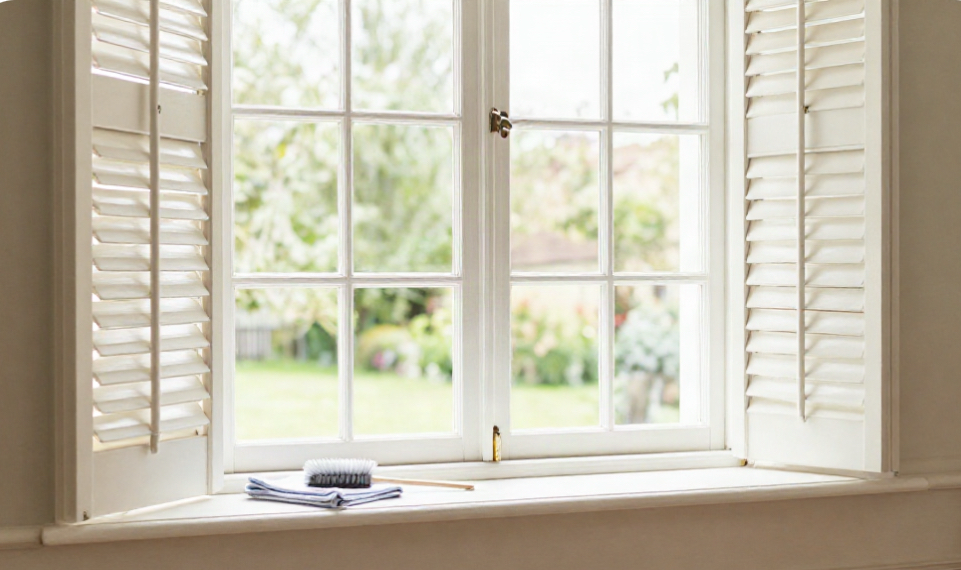
Why wooden shutters are one of the lowest-maintenance window coverings in the home A simple routine: weekly dusting, monthly deep clean and what to use on louvers and frames Mistakes to avoid, seasonal care tips, and when to ask Beaumont for advice or a free home survey
Wooden shutters are one of the quietest investments you can make in a home. Fitted properly, they shape the light in a room, keep the street out and carry on looking smart year after year with surprisingly little fuss. As a family-run specialist fitting made-to-measure wooden shutters in Farnborough and right across Surrey and Hampshire, one question comes up again and again: how do I keep them looking this good? Here is our simple, practical guide to cleaning and caring for wooden shutters – the same routine we use on our own.
Why wooden shutters are one of the lowest-maintenance window coverings in the home
Curtains trap dust in their weave, fade in strong sunlight and eventually need taking down for a wash or a trip to the dry cleaner. Blinds collect grime along every cord and slat edge. Shutters are different. Because they are made from solid, sealed wood, dust sits on the surface rather than soaking in, so a quick wipe is usually all that is needed.
Our shutters are crafted from Paulownia wood – a fast-growing, lightweight and eco-friendly hardwood that resists warping and holds its finish beautifully. It does not shrink, sag or droop, and there is nothing to launder. Looked after with the routine below, a good set of wooden shutters will stay crisp and clean for many years.
What you will need
You almost certainly have everything already. A soft microfibre cloth or a feather duster, a second clean cloth for drying, a bowl of warm water with a couple of drops of mild washing-up liquid, and a soft brush or the brush attachment on a vacuum for the little gaps between the louvres. That is it. There is no need for specialist sprays, waxes or polishes.
The weekly routine: five minutes with a duster
Dust little and often and you will rarely need anything more. Work from the top of the window downwards so you are not dropping dust onto what you have just cleaned. Hold each louvre gently with one hand and dust along it with the other, turning it slightly as you go so both faces are covered. A soft brush or a vacuum on its lowest setting is ideal for the hinge rail and the frame edges, where dust likes to settle.
The monthly deep clean, step by step
Once a month, give your shutters a little more attention with this easy sequence: dust the whole panel first, top to bottom; add two or three drops of mild washing-up liquid to a bowl of warm water; dip a microfibre cloth in and wring it out so it is barely damp, never dripping; wipe each louvre from the hinge side outwards, front and back, supporting it gently as you work; wipe down the frame, the tilt rod and the top rail; and finish by going over everything with a clean, dry cloth so no moisture is left behind.
Always work from the top of the panel downwards, and leave the louvres open afterwards so air can circulate and any last trace of dampness can escape.
How to clean the louvres and frames without damaging the finish
The secret is restraint. The surface of a sealed wooden shutter is tough, but it will not thank you for soaking or scrubbing. Use the least amount of water you can, keep the cloth damp rather than wet, and never spray a cleaner directly onto the wood – spray it onto the cloth instead. Pay particular attention around the hinges and the tilt rod, and dry those areas last so no water sits in the mechanism.
Mistakes to avoid
A few common habits do more harm than good. Never soak the shutters or leave water sitting on the surface, especially in a kitchen or bathroom where the air is already damp. Avoid abrasive creams, bleach-based sprays, scouring pads and anything described as heavy-duty, as these can dull or scratch the finish. Skip furniture polish and wax as well – on a sealed surface they simply build up into a sticky film that attracts more dust. Steam cleaners are a no-no, and please do not force stiff louvres; if something feels wrong, it usually means a small adjustment is needed rather than more pressure.
Seasonal care through the year
In spring, give the whole window a fresh look – dust thoroughly, check that the louvres tilt freely and that the frame is sitting tidy against the wall. Through summer, strong sunlight can be intense on south-facing windows, so angle the louvres to soften the glare and protect fabrics and floors nearby. Come autumn and winter, keep an eye on condensation in kitchens, bathrooms and bedrooms; wipe any moisture away with a dry cloth and let a little air in when you can. A well-ventilated room is kind to wood.
When to ask Beaumont for advice
Our care routine keeps shutters looking lovely, and it is one of the reasons wooden shutters are such a low-maintenance choice. If your existing shutters feel stiff, look tired, or were not fitted to your window in the first place, that is usually a matter of fitting rather than cleaning – and it is something we can put right.
If you are thinking about your first set, or upgrading a room, we would love to help. As a family-run company, we offer a free home survey across Farnborough, Surrey and Hampshire, where we measure up, talk through styles such as our bay window, tier on tier, full height and cafe style shutters, and give you honest, no-pressure advice. Beautiful wooden shutters, fairly priced and expertly installed – and cared for as easily as this.
Book your free home survey with Beaumont Shutters and Blinds today and let us design a set that suits your home.
